Your pool water level keeps dropping, and you have already ruled out evaporation. Two different companies gave you two different quotes, and neither one explained how they would actually find the leak.
This is the point where homeowners in Columbia, SC, need to know what they are paying for and who can complete the job. Understanding pool leak detection methods before you call anyone puts you back in control. This article walks through the five questions that separate a reliable provider from a costly guess.
Asking the right questions about certification, licensing, detection technology, specialization, and repair follow-through helps you choose a provider built to diagnose your pool leak correctly the first time.
How These Questions Were Selected
Each question below targets a specific risk homeowners face when comparing pool leak detection methods, based on how the work is actually performed and regulated in South Carolina.
National guidance from the CDC Model Aquatic Health Code underscores why trained professionals, not guesswork, should handle pool diagnosis and repair work.
The provider must demonstrate a real, checkable credential, not a vague claim of experience.
The question must expose whether the company protects your property during the diagnostic process.
The question must reveal whether the company can finish the job, not just diagnose it.
Every criterion below reflects an actual point of failure homeowners report when a provider falls short.
1. Are They Certified in Professional Pool Leak Detection Methods?
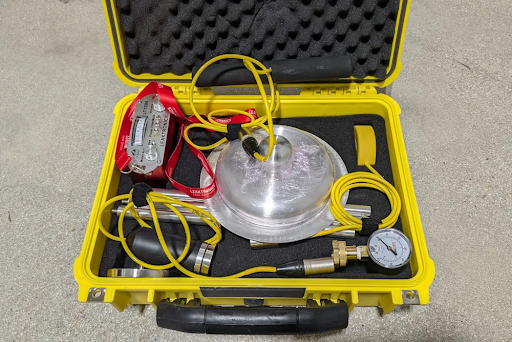
A Leaktronics certification confirms that a technician has trained specifically on the equipment behind modern pool leak detection methods, rather than relying on trial and error.
Ask exactly which certification the technician holds and how recently they trained on it. The Pool and Hot Tub Alliance grants certification to individuals, not companies, so a company's overall reputation does not guarantee that the technician arriving at your door is trained on the equipment being used.
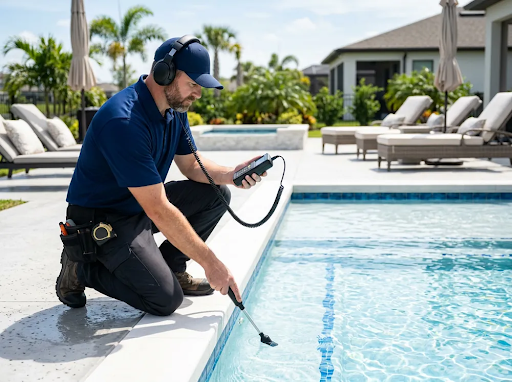
A Leaktronics-certified technician pinpoints a leak using electronic listening, pressure testing, and dye testing together, rather than guessing from visible damage.
One reviewer described this directly: "Wow. What a great experience! I was blown away by the professionalism and Ray's ability to find the leak. Don't go anywhere else! One call and the leak is found."
What Certification Confirms
A real certification means the technician is trained on the specific tools used to trace a leak, not just general pool maintenance.
Best For
Buyers who want technical accuracy over a rough estimate of where the leak "probably" is.
One Honest Limitation
Certification standards vary between training providers, so you still need to ask which specific program the technician completed.
2. Are They Licensed and Insured for Pool Leak Work?
Licensing and insurance protect you financially if something goes wrong during detection or repair, and both are easy to verify before any work starts.
Request the company's license number and confirm it directly. South Carolina requires certain pool construction and alteration work to be performed by a properly licensed contractor.
The FTC's guidance on avoiding home improvement scams recommends confirming a contractor's license and insurance before any work begins.
A licensed and insured provider gives you additional protection if property damage or other issues occur during the work.
What Licensing and Insurance Cover
A verified license confirms legal standing to perform the work, and insurance covers the cost if something goes wrong on your property.
Best For
Homeowners who want a documented safety net, not just a handshake agreement.
One Honest Limitation
Licensing confirms legal standing, not detection skill, so pair this question with the certification question above.
3. Will They Use Non-Invasive Detection or Cut Into the Pool First?
Non-invasive electronic detection finds the leak location before anyone touches your pool structure, which avoids unnecessary excavation among common pool leak detection methods.
Find out the provider's detection sequence before they mention repair. A qualified technician checks the equipment pad, return lines, and shell with electronic listening tools first, then recommends targeted access only once the leak location is clear.
An uncovered 500-square-foot pool can lose between 12,000 and 31,000 gallons of water a year to evaporation alone, according to the EPA WaterSense "Jump Into Pool Water Efficiency" guide.
Skipping straight to excavation or liner removal before confirming the leak location often results in unnecessary property damage and a bigger repair bill than the leak itself required.
Why Non-Invasive Detection Matters
Electronic listening and pressure testing narrow the leak location without opening walls, decking, or the pool shell first.
Best For
Owners who want to avoid disruption to their pool deck or landscaping.
One Honest Limitation
Some structural leaks still require a small, targeted access point once the general area is confirmed electronically.
4. Can They Detect Leaks in Vinyl Liners Specifically?
Vinyl liner leaks often behave differently from leaks in concrete or fiberglass pools, and some standard pool leak detection methods may be less effective for certain vinyl liner leaks.
Confirm whether the technician uses equipment designed for vinyl liners, since a pinhole in a liner does not always produce the same acoustic signature as a crack in a shell. A provider using a dedicated vinyl pool leak detection tool can locate these leaks more precisely than a generic electronic listening device alone.
Why Vinyl Liners Need a Different Approach
A liner pinhole often needs a specialized tool because it does not always produce the same acoustic signal as a shell crack.
Best For
Vinyl pool owners who have already had one inconclusive inspection from a general pool service.
One Honest Limitation
Not every leak detection company carries liner-specific tools, so this question alone can immediately narrow your shortlist.
5. Do They Handle Both Detection and Repair, or Just One?
Hiring one company for both detection and repair can reduce the handoff issues that may occur between separate contractors.
Clarify what happens after the leak is found. Some companies stop at diagnosis and hand you a report to take elsewhere, which means starting the vetting process over again with a second company.
Others, like The Leak Geeks, follow the "We Find It and Fix It" model, where the same team that diagnoses the leak also completes the repair.
One customer described exactly this kind of continuity: "The Leak Geeks found our pool leak and stood by their repair when it failed (not their fault; the liner was brittle, and it was in an awkward spot). They had a much faster turnaround time than other companies we've used in the past. We appreciate their responsiveness and integrity in dealing with an unexpected leak!"
Why One Company Matters
A single accountable team removes the finger-pointing that happens when one company diagnoses the leak and a different company repairs it.
Best For
Owners who want a single accountable point of contact from diagnosis through the final fix.
One Honest Limitation
Confirm the repair scope and warranty terms upfront, since "handling repairs" can mean different things between companies.
Frequently Asked Questions
Q1. How much does pool leak detection cost in Columbia, SC?
Pricing depends on the pool type and how accessible the suspected leak area is. Most companies, including The Leak Geeks, offer a free estimate before any work begins, so you can compare the diagnosis and the price before committing to repairs.
Q2. How long does professional pool leak detection take?
A typical visit takes one to a few hours, depending on how many systems need testing. Electronic listening, pressure testing, and dye testing often finish in one appointment without draining the pool.
Q3. Can a pool leak be detected without draining the pool?
Yes. Electronic listening equipment, pressure testing, and dye testing are all designed to locate leaks while the pool remains full. You typically only need to drain the pool if a physical repair requires direct access to the damaged area.
Q4. What happens if the leak detection company can't find the leak?
A qualified technician will walk you through what was tested and why, rather than leaving you without an answer. Reputable providers document their process so you understand what has been ruled out before deciding on next steps.
Get an Accurate Diagnosis From a Certified Team
The questions above are not about making the process complicated. They are about making sure the company you hire can finish what it starts, using pool leak detection methods that protect your property instead of guessing at it.
A Leaktronics-certified, licensed, and insured team that handles both detection and repair removes the biggest risks homeowners face when a pool starts losing water.
Get a free, no-obligation pool leak quote from The Leak Geeks within 24 hours.
Think you have a leak?
We find it and fix it. Get a precise diagnosis and a free quote from a local, Leaktronics-certified team.